
Creative Commons Attribution-ShareAlike 4.0 Unported License
Buddhism in Tibet
Tibetan Painting Style
high-definition creative commons posters from Buddhism in Tibet together with further information.
These stroybooks provide a comprehensive look at the foundational figures and evolutionary history of Tibetan Buddhism through a series of illustrated biographical summaries. The collection highlights the three great Dharma Kings who utilized political power and strategic alliances to establish the faith, alongside Indian mahāsiddhas like Padmasambhava who introduced esoteric tantric practices. It details the emergence of major spiritual lineages, such as the Sakya, Kagyu, Nyingma, and Gelug schools, through the dedicated work of prolific translators and monastic reformers. The texts also honor prominent female masters like Yeshe Tsogyal and Machig Labdron, who shaped the tradition’s meditative and philosophical depth. Collectively, these sources illustrate how Tibet transformed from a fragmented warrior society into a sophisticated center of Buddhist scholarship and practice over several centuries. Through the lives of these saints and scholars, the archives document the systematic preservation and translation of sacred teachings that define the region’s unique religious identity.
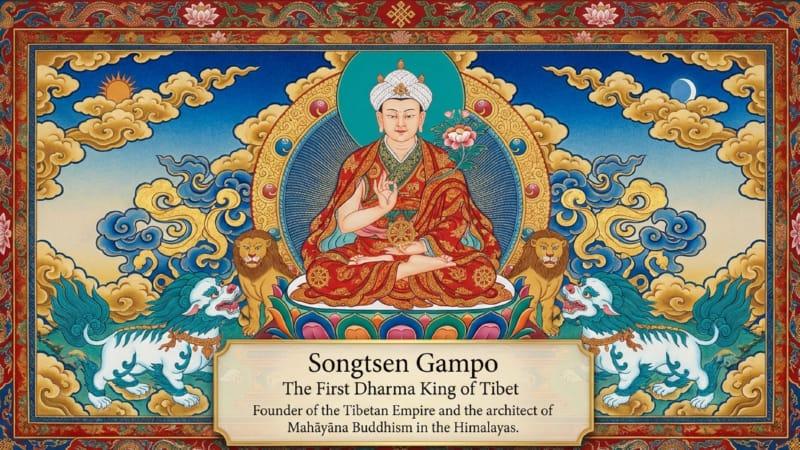
1. Songsten Gampo (1st Dharma King)
2. Sadmarkar (Songsten’s Sister)
3. Trisong Detsen (2nd Dharma King)
4. Śāntarakṣita (Monastic Founder)
5. Padmasambhava (Tantric Master)
6. Yeshe Tsogyal (Mother of Tibetan Buddhism)
7. Vimalamitra (Dzogchen Master)
8. Ralpachen (3rd Dharma King)
9. Atiśa Dīpaṅkara (Lamrim Master)
10. Drokmi Śākya Yeshe (Sakya Master)
11. Marpa Lotsāwa (The Great Translator)
12. Khön Könchok Gyalpo (Sakya Trizin)
13. Machig Labdron (Chöd Master)
14. Jetsun Milarepa (Great Yogi)
15. Gampopa Sönam Rinchen (Dagpo Kagyu)
16. Rechungpa Dorje Drakpa (Kagyu Master)
17. Śākya Paṇḍita (Mañjuśrī Emanation)
18. Longchenpa (Great Perfection)
Creative Commons Attribution-ShareAlike 4.0 Unported License